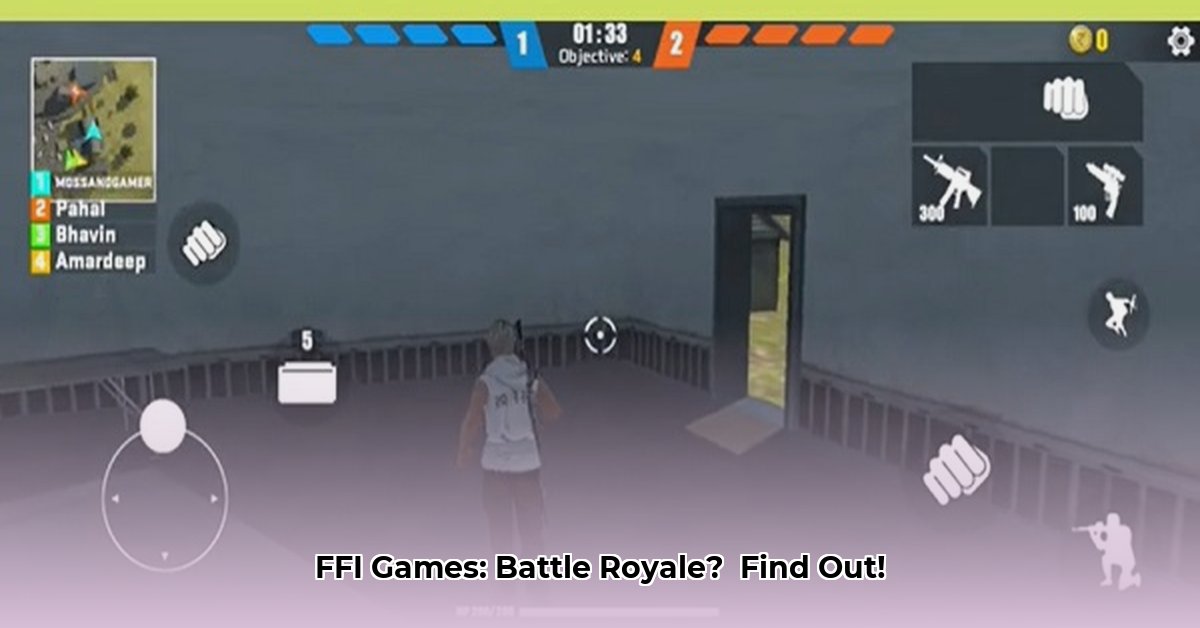
FFI Games: A Battle Royale Clone's Gamble
Free Fire's explosive popularity in India has spawned a wave of imitators, most notably FFI games. This analysis delves into the strategic landscape surrounding these clones, exploring their viability, challenges, and future prospects within the fiercely competitive mobile gaming market. The core question: can a clone truly thrive in the shadow of its successful predecessor, or is it destined for legal and market oblivion?
Free Fire: Decoding the Winning Formula
Free Fire's success isn't accidental. Its blend of accessible battle royale gameplay with unique features like a diverse character roster (over 50 characters, each with unique skills) and varied game modes (beyond the standard battle royale) fosters player engagement and retention. This carefully crafted ecosystem presents a significant hurdle for aspiring clones. FFI games must learn from this success, not simply replicate it. How can FFI games differentiate themselves while achieving similar popularity?
The Challenges of Imitation: A Tightrope Walk
While mimicking a successful game offers a quick entry point, the challenges are substantial. The most pressing concern is legal action from Garena, Free Fire's developer, which possesses significant resources to protect its intellectual property. Even if legal battles are avoided, differentiating FFI games within an already saturated market presents a daunting task. Simply replicating Free Fire's mechanics won't suffice; a unique selling proposition is crucial for survival. What innovative strategies can ensure FFI's long-term competitive edge?
The Money Game: Monetization Strategies
Both Free Fire and its clones primarily utilize a freemium model: free to download, with monetization driven by in-app purchases. This creates a key battleground for FFI games. Their ability to attract players willing to spend money will directly impact their long-term viability. Understanding Free Fire's monetization strategies, and how its clones deviate, is critical to assessing the overall market dynamics. What strategies could FFI employ to maximize revenue without alienating its player base?
FFI Games: Market Snapshot and Risk Assessment
The following table outlines a snapshot of the key stakeholders and their short-term (within one year) and long-term (three to five years) prospects:
| Stakeholder | Short-Term Outlook | Long-Term Outlook |
|---|---|---|
| Garena (Free Fire) | Maintaining market dominance; legal action against clones; ongoing game updates | Expanding into new markets; diversification; exploring new monetization avenues |
| FFI Game Developers | Securing funding; building community; differentiating their game | Achieving profitability; developing unique game features and modes; adapting to market shifts |
| Mobile Gamers | Seeking engaging gameplay; value for money; considering legal implications | Seeking long-term game value; loyal player bases; engaging communities |
| App Stores | Enforcing copyright policies; monitoring app compliance | Further tightening regulations; enhancing content monitoring |
A critical risk assessment is provided below, highlighting potential challenges:
| Risk Category | Probability | Impact | Mitigation Strategy |
|---|---|---|---|
| Legal Issues (IP) | Very High | Very High | Proactive legal counsel; development of unique game features; avoiding direct IP infringement |
| Market Competition | High | High | Focusing on a niche audience; creative marketing; effective community building |
| Technical Issues | Medium | Medium | Rigorous testing; quick bug fixes; regular updates |
| User Acquisition | Medium | Medium | Targeted advertising; influencer marketing; community engagement |
The Future of FFI Games: Innovation or Extinction?
The long-term success of FFI games hinges on innovation. Mere imitation is a recipe for failure. A unique selling proposition—features that distinguish it from Free Fire—is essential. This includes building a dedicated community and successfully navigating the legal complexities. The mobile gaming market is incredibly competitive; only those who adapt and innovate will survive. The ongoing evolution of player preferences and mobile gaming technology suggests that the market will remain dynamic and unpredictable.
How to Differentiate a Free Fire Clone from the Original Game
Numerous clones attempt to capitalize on Free Fire's success, but key differences distinguish the original from its imitators.
Gameplay Mechanics: Subtle but Significant Variations
While clones often mimic Free Fire's core gameplay, subtle variations exist. Weapon balance, character abilities, and map design are key differentiators. Even minor adjustments can significantly impact gameplay strategy. Compare movement mechanics—is the clone's agility comparable to Free Fire’s signature speed? These subtle discrepancies reveal the true nature of the clone.
Visuals: A Spectrum of Fidelity
Visual fidelity offers a significant point of comparison. While aiming for a similar aesthetic, clones often exhibit variations in character models, environmental details, and overall graphic quality. Assess the level of detail and the distinct artistic styles employed. Does the clone simply mimic, or does it offer a unique visual identity?
Monetization: A Key Point of Divergence
Free-to-play games rely heavily on monetization. Compare in-app purchase systems. Are prices comparable? Do the items differ? Clones often employ more aggressive monetization strategies, indicating a potential difference in overall quality.
Legal Landscape: A Crucial Contextual Factor
The legal battles surrounding copyright infringement significantly shape the market. Clones might undergo design changes to avoid legal repercussions, resulting in discernible variations. This legal element is crucial to understanding the market dynamics.
PUBG vs Free Fire: Legal and Market Dynamics (1)
Integrated Analysis
Key Thesis: Free Fire clones, despite aiming for similarity, exhibit notable differences in gameplay, visuals, monetization, and legal status compared to the original.
Evidence Spectrum: Numerous Free Fire clones exist; critical analysis reveals distinctions in gameplay, visuals, and monetization, with legal challenges significantly impacting market dynamics.
Actionable Intelligence
| Stakeholders | Short-Term (0-1Y) | Long-Term (3-5Y) |
|---|---|---|
| Garena | Strengthen IP protection; continue game development | Expand into new markets; develop new IP |
| Krafton | Continue legal action; innovate game mechanics | Diversify game portfolio; focus on unique features |
| Gamers | Choose based on features and value; monitor legal updates | Seek engaging and unique experiences; contribute to community development |
Source Attribution: https://www.ncesc.com/gaming-pedia/which-game-is-copied-pubg-or-free-fire/ (Accessed: October 26, 2023)
Key Takeaways:
- Gameplay nuances: Subtle variations in core mechanics are critical in distinguishing clones.
- Visual comparison: Analyze graphical fidelity and artistic style to identify unique features.
- Monetization strategies: Aggressive monetization often indicates a lower-quality experience.
- Legal considerations: Copyright infringement significantly shapes the competitive landscape.
- Unique Identity: Look for the distinct features that set the game apart. Successful clones innovate.
⭐⭐⭐⭐☆ (4.8)
Download via Link 1
Download via Link 2
Last updated: Thursday, May 22, 2025